Hidden Winter Storm Roof Damage: Indy Checklist
Hidden Winter Storm Roof Damage: Indy Checklist
Hidden Winter Storm Roof Damage: Indy Checklist
If you live in Indianapolis, you already know winter storms here don’t always look dramatic. Sometimes it’s not a blizzard, it’s that annoying mix. A little sleet, a little snow, then it warms up, rains, freezes again, then we get wind that sounds like it’s trying to peel your house open like a can.
And the roof takes all of it.
The tricky part is the damage that doesn’t scream for attention. No obvious missing shingle. No water dripping from the ceiling right away. Just small stuff that quietly gets worse until spring rains show up and then suddenly you’re dealing with a stain, wet insulation, maybe even a moldy smell that won’t go away.
So here’s a practical checklist for hidden winter storm roof damage, written for Indy homes in 2026. Not theoretical. Not a contractor brochure. Just what to look for, what it usually means, and what you can do next.
Quick note before we start. If your roof is steep, icy, or you’re not comfortable up there, don’t go up there. You can do a lot of this from the ground with binoculars, and the attic checks are often more revealing anyway.
Why Indianapolis roofs get sneaky winter damage
A lot of places get cold. Indy gets freeze thaw chaos. That’s what makes it unique.
In a typical Indianapolis winter, roofs deal with:
- Repeated freeze thaw cycles that pry shingles and flashing apart over time
- Ice dams from uneven attic temps and poor ventilation
- Wind gusts that lift shingle edges, especially on older asphalt roofs
- Heavy wet snow loads that stress decking and trusses more than fluffy snow does
- Branch falls from ice loaded trees, even if they don’t crash straight through
And because many neighborhoods have mature trees, older housing stock, and a mix of roof styles, the weak points vary house to house. A split level in Pike Township doesn’t fail the same way as a bungalow in Broad Ripple. But the patterns rhyme.
The Indy winter storm roof damage checklist (hidden stuff included)
I’m going to break this into three zones: outside from the ground, inside the attic, and inside living spaces. Then I’ll add the “do this next” section because honestly that’s what people really need.
1) Ground check: what to scan without climbing
You’re looking for changes. Edges that don’t look as crisp. Lines that don’t look as straight. Anything that looks like it shifted.
A. Shingle edges that look lifted or “fluttery”
What it looks like: On the ridge or along the lower edges, shingles look slightly curled, not flat. Sometimes you can see shadow lines.
Why it matters: Wind can break the seal strip under shingles. Once the seal is compromised, spring storms can rip sections off or push water underneath even if the shingle is technically still there.
What to do: Mark the slope and area. Take photos zoomed in. If it’s widespread, plan a roof inspection. This is one of those issues that’s cheap early and annoying later. You might want to consider hiring Issaquah home inspectors for a thorough check-up.
B. Missing granules in gutters or downspout exits
What it looks like: Dark sand like grit in gutter corners, at downspout splash blocks, or on the driveway where water exits.
Why it matters: Asphalt shingles shed granules over time, but winter accelerates it with ice scraping and thermal stress. A sudden increase after a storm can mean shingles got chewed up or cracked.
What to do: Scoop a little into a cup and take a photo. Sounds silly, but if you end up filing an insurance claim, documentation helps.
C. Sagging roof lines or “soft” looking spots
What it looks like: A dip between rafters, a ridge line that looks wavy, or a subtle sag near valleys.
Why it matters: Snow load, wet snow especially, can stress decking. If there’s already older sheathing or prior moisture damage, winter can push it over the edge.
What to do: Don’t ignore sagging. This is not cosmetic. If you see it, get a professional out.
D. Flashing that looks bent, separated, or popped
What it looks like: Around chimneys, walls, skylights, vent pipes. You might see metal edges lifted, gaps, or pieces that look “proud” instead of tight.
Why it matters: Flashing failures cause a lot of hidden leaks. Winter movement opens tiny gaps, and then spring rain finds them.
What to do: Zoom photo. If it’s chimney flashing, pay extra attention. Chimneys move differently than roofs.
E. Gutter damage and fascia issues
What it looks like: Gutters pulling away, spikes popping out, fascia board staining, icicle scars.
Why it matters: Ice dams and heavy ice can pull gutters loose. That can also mean water backed up behind the gutter and soaked the fascia or roof edge.
What to do: If your gutters are hanging or tilted, fix them. Water management is
2) Attic check: where winter roof damage shows up first
If you only do one thing on this list, make sure it's the attic check. Seriously. Water doesn’t always reach your drywall right away, but it almost always leaves a signature in the attic.
Bring a bright flashlight. Go on a cold day if possible. You’re looking for moisture, stains, frost, and airflow issues.
A. Wet insulation or insulation that looks matted down
What it looks like: Areas of insulation that are darker, clumped, or flattened.
Why it matters: That’s usually from a slow leak, condensation, or ice dam meltwater traveling down to a low point. Wet insulation loses R value and can lead to mold.
What to do: Don’t just fluff it back up. Find the source.
B. Dark staining on roof decking or rafters
What it looks like: Brown or black stains on plywood/OSB, along nail lines, around penetrations, or in valleys.
Why it matters: Could be an old leak, could be active. Winter leaks sometimes dry out and then come back hard in spring.
What to do: Press a tissue against the stain. If it picks up moisture, you’ve got an active issue. Take photos with flash on, then another with flash off if possible.
C. Frost on nails or underside of decking
What it looks like: White frost crystals on nail tips, or a light sheen of ice on wood.
Why it matters: This is often attic condensation, not a roof leak. Which sounds less serious, but long term it can rot decking and mimic leak damage.
What to do: Look at ventilation and air sealing. Bathroom fans dumping into attic, recessed lights leaking warm air, hatch doors not sealed. This is fixable, but you have to actually fix it.
D. Moldy smell or visible mold speckling
What it looks like: Speckled black spots on wood, or that damp basement smell up in the attic.
Why it matters: Moisture is hanging around too long. Could be ventilation. Could be leaks. Either way it’s a warning.
What to do: Don’t just spray something and call it a day. Figure out if moisture is coming from roof entry or from indoor air escaping upward.
E. Light leaks that should not be there
What it looks like: Pinpoints of daylight through decking, around vents, or at roof edges.
Why it matters: If light can get in, wind driven rain can get in. And in Indy, we definitely get wind driven rain.
What to do: Photograph and mark location by counting rafters or measuring from gable end. Makes it easier for a roofer to find the spot.
3) Inside living spaces: subtle clues people ignore
Sometimes the first sign is inside, but it’s not always a ceiling drip.
A. A ceiling stain that looks like a faint ring
What it looks like: Yellowish or brown circle, often faint. Sometimes it appears and then stops.
Why it matters: That’s often a slow leak that pooled, dried, pooled again. Winter meltwater can do this.
What to do: Take a photo now. Put a date next to it in your phone notes. If it grows, you’ll have a timeline.
B. Peeling paint near exterior walls or top floor corners
What it looks like: Bubbling paint, slight peeling, drywall tape separating.
Why it matters: Could be ice dam water running down behind the wall, not across the ceiling.
What to do: Check the attic above that area. Also check for bathroom venting issues.
C. Drafts that feel new
What it looks like: A cold draft near skylights, chimneys, or top floor recessed lights.
Why it matters: Storm winds can open gaps in flashing or around penetrations. Or attic air sealing got worse.
What to do: Note where it’s happening. It can correlate with flashing and vent boot problems.
D. Higher humidity indoors after storms
What it looks like: Condensation on windows, musty smell, thermostat shows higher humidity than usual.
Why it matters: Moisture intrusion or attic condensation issues sometimes change whole house humidity.
What to do: Use a cheap hygrometer if you have one. If you’re consistently above about 50 percent in winter, something’s off.
The big winter culprits in Indy (and how to spot them)
Ice dams: the classic that still gets people
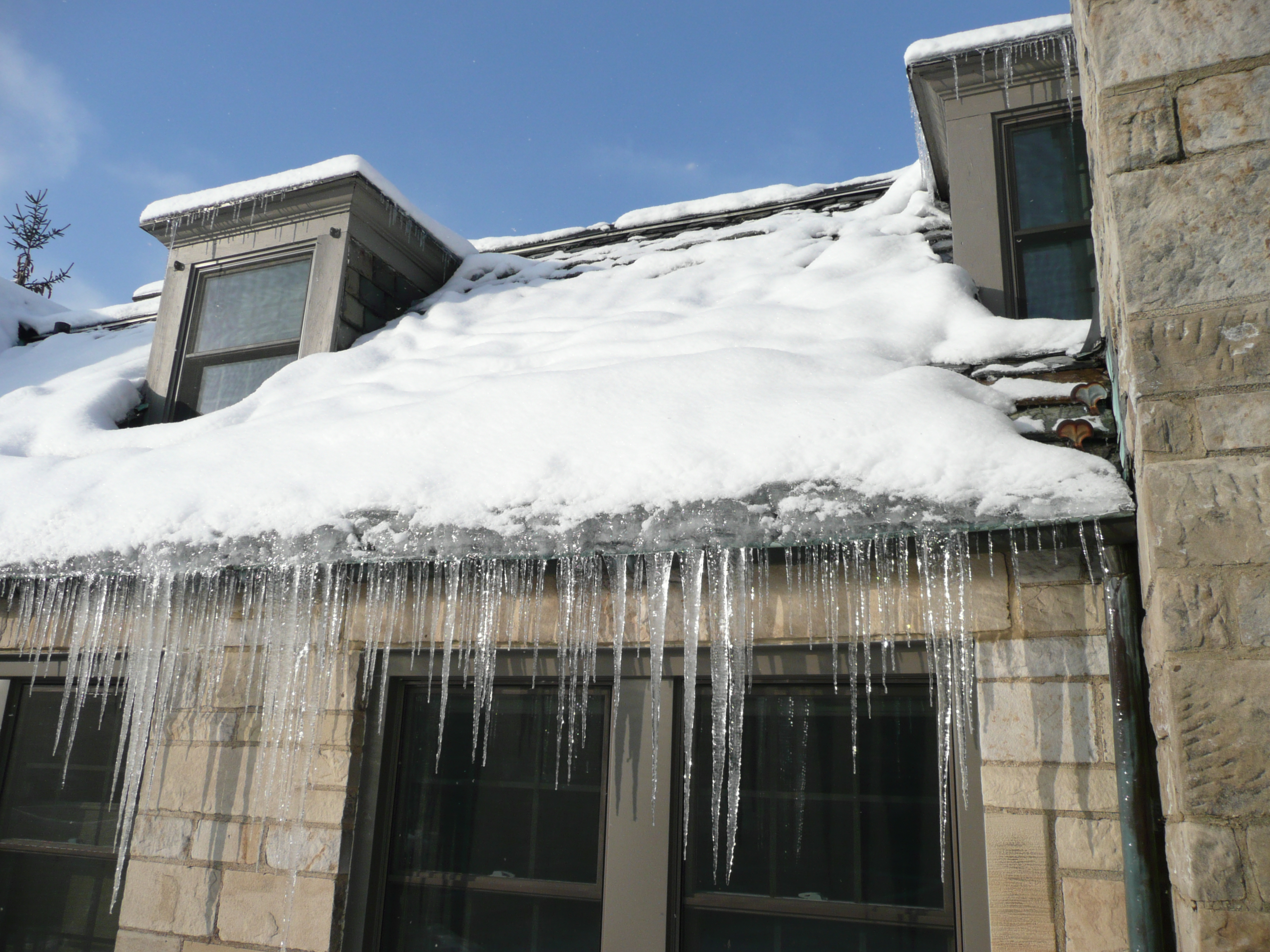
Ice dams happen when snow melts on a warmer part of the roof and refreezes at the cold eaves. Water backs up behind the ice and can travel under shingles, potentially causing significant damage.
Clues you’ve had an ice dam:
- Thick icicles along the eaves
- Gutter ice that looks like a solid block
- Leaks near exterior walls, not necessarily in the middle of the room
- Wet insulation at the roof edge
What usually fixes it long term:
- Better attic insulation coverage at the exterior wall line
- Air sealing, especially around top plates and penetrations
- Balanced ventilation (soffit and ridge, not random)
Quick reality check. Heat cables can be a band aid, not a cure. Sometimes they’re necessary, but if you rely on them every winter, the underlying issue is still there.
Wind damage: not always missing shingles
Indy gets gusty. And wind doesn’t have to remove shingles to damage them. It can lift edges, weaken seals, and open up nail holes.
Clues:
- Random tabs lifted on one slope
- Debris in yard from neighbors roofs
- Shingles that look “creased” like they bent and came back down
Hail and sleet: the quiet bruising
Even small hail or hard sleet can bruise shingles. Sometimes you don’t see it from the ground.
Clues:
- Granules accumulating suddenly
- Downspout dents on aluminum
- Soft spots on shingles if a roofer does a touch test
In addition to these issues, winter weather can also lead to roof leaks which may not be immediately apparent. It's crucial to keep an eye out for any signs of leaks and address them promptly to prevent further damage.
What to document for insurance, just in case
If you end up filing a claim, what you do in the first 48 hours can matter.
- Take wide photos of each roof slope from the ground
- Take close up photos of anything suspicious: flashing gaps, lifted shingles, gutter damage
- Photograph granules in gutters or at downspouts
- Save storm dates and screenshots of weather alerts
- If you have interior staining, photograph it with a known object for scale
Also, don’t throw away damaged material if you find it in the yard. Bag it.
When you should stop DIY checking and call a pro
Call a reputable local roofer or inspector if you have any of these:
- Visible sagging in the roof line
- Active dripping or wet insulation
- Flashing visibly separated at chimney or wall
- Multiple lifted shingles after a wind event
- Evidence of ice dam leaks (especially recurring)
And if you’re in an older Indy home with multiple roof layers, or you already had one patch job on top of another, get it looked at sooner. Layered roofs hide problems until they don’t.
A simple post storm routine (the one most people actually stick to)
If you want a routine you’ll realistically do after winter storms, here:
- Walk the perimeter and scan the roof edges and ridge line.
- Check gutters and downspout exits for granules and debris.
- Look at soffits and fascia for new staining.
- Go into attic for 5 minutes with a flashlight. Check around vents, chimney, and valleys.
- Check top floor ceilings and corners for new discoloration.
Done. You don’t need to make it a weekend project every time.
However, if you notice any signs of ice dam damage, it's crucial to seek professional help immediately.
Common Indy roof weak spots (quick hit list)
If you’re not sure where to focus first, these are frequent leak starters around here:
- Chimney flashing on older brick chimneys
- Valleys where two roof slopes meet, especially if leaves pile up
- Plumbing vent boots on roofs older than 8 to 10 years
- Skylight edges and old caulk lines
- Eaves above exterior walls where ice dams form
- Low slope porch roofs attached to taller walls
What “hidden damage” turns into if you ignore it
Not trying to scare you, just being honest.
Small winter roof issues often turn into:
- Rotten roof decking that expands the repair area
- Moldy insulation and higher energy bills
- Damaged drywall and paint, which becomes a bigger interior job
- Repeated leaks that are harder to trace because water travels
The weird part is how often the original fix is simple. A boot collar. A flashing repair. A few shingles resealed. But it has to happen before water keeps doing its thing.
FAQ: Hidden Winter Storm Roof Damage in Indianapolis
How soon after a winter storm should I check my roof?
Within 24 to 72 hours, once it’s safe to walk around outside and access the attic. Attic evidence can disappear if things dry out, so earlier is better.
Can a roof leak only in winter and then stop?
Yes. Ice dams and freeze thaw gaps can cause winter only leaks. They often pause when temps stabilize, then reappear during spring rains.
Are icicles always a sign of roof damage?
Not always. Some icicles are normal. But thick icicles along the entire eave, plus gutter ice and interior staining, is a strong ice dam sign.
What’s the easiest hidden damage to miss?
Vent boot cracks and small flashing separations. They don’t look dramatic from the ground, but they can leak for months.
Should I get on the roof to check for damage?
Not if it’s icy, steep, or you’re not experienced. Ground photos and attic inspection catch most hidden winter damage. A professional can do the roof surface check safely.
Does new construction in Indy still get ice dams?
Yes. If insulation is uneven, attic is air leaky, or ventilation is imbalanced, even newer homes can get ice dams.
Will homeowners insurance cover winter storm roof damage?
Sometimes, depending on your policy, the storm event, and whether the damage is considered sudden and accidental versus wear and tear. Document everything and talk to your insurer and a qualified roofer.
What if I only see granules in the gutter but no leaks?
Granule loss can be early warning. It doesn’t guarantee a leak today, but it can mean shingles are aging faster or were stressed by ice and wind. It’s worth an inspection if it’s a sudden change after a storm.
How do I know if attic frost is a roof leak or condensation?
Frost on nail tips across wide areas often points to condensation from warm moist indoor air leaking into the attic. Localized staining near a penetration or valley is more leak like. A professional can confirm, but ventilation and air sealing are common culprits.
What’s one preventative thing to do before next winter?
Air seal and insulate the attic properly, especially at the edges above exterior walls, and make sure bathroom fans vent outside. That combo prevents a lot of ice dam and condensation problems.
